
Why TBR lists get unusable
Saving a title is free. Choosing what to open next is not. Most Want to Read piles fail for the same reasons:
- No priority. Book 1 and book 400 look identical, so you scroll forever or buy something new instead.
- No context. You saved it because a friend hyped it, a mood matched, or it was on sale — six months later you only see a cover.
- False "reading" states. Half-finished books sit on Currently Reading forever because pausing or DNFing feels like quitting.
- Acquisition without curation. Imports, hauls, and wishlists dump hundreds of titles into one shelf with no triage step.
Organization is not aesthetics — it's making the next book obvious so your reading goal and habit don't stall between finishes.
Criteria for a TBR system that lasts
- A short active list. You should be able to name the next few books without searching.
- Room for themes without tag sprawl. Genre, format, or "mood" shelves beat twenty overlapping tags.
- Notes at save time. Context is cheaper to capture once than to reconstruct later.
- Honest lifecycle. Want → Reading → Finished, plus Paused and DNF as first-class exits.
- Exportable. If the list lives only in a locked silo, you're organizing someone else's product.
A practical shelf structure
You do not need a taxonomy textbook. Start with this and stop when it feels enough:
- Next Up — 5 to 10 books you would happily start this month. Cap the size hard; when you finish one, promote from elsewhere.
- Want to Read (backlog) — everything else you still mean someday. Cull quarterly.
- Thematic or priority sub-shelves — e.g. "Series in progress," "Book club candidates," "Short / travel," "Hard mode (long/dense)." In Leafed these are custom shelves and sub-shelves under your library.
- Owned vs not owned (optional) — physical shelves and library holds behave differently from aspirational titles.
Priority is a property of where the book sits, not a star rating you never update. Move books between shelves when taste changes; don't leave ghosts on Next Up.
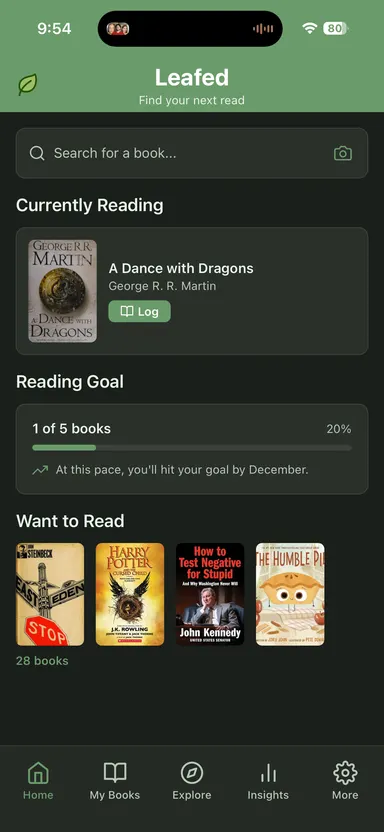
Notes on the TBR (the underrated field)
When you save a book, add one sentence: who recommended it, which mood it fits, or which series it continues. That note is the difference between "why is this here?" and "oh — rainy-day comfort read." Leafed supports notes on Want to Read items for exactly this. If your tool can't attach a note to a TBR entry, you're organizing titles, not intentions.
DNF and pause honesty
A clean TBR depends on a clean Currently Reading shelf:
- Paused — you intend to return (library due date, travel, waiting for sequels). Park it so it doesn't fake an active queue.
- DNF — you won't finish. Logging it is data, not shame; it also stops the book from reappearing as unfinished guilt on every open.
- Don't leave zombies. Three "reading" books you haven't touched in two months means the list is lying to you.
Honest statuses make Next Up trustworthy. Untrustworthy lists get ignored — which is how people abandon trackers entirely.
How tools compare for TBR organization
| System | Shelves / structure | TBR notes | Best for |
|---|---|---|---|
| Leafed | Want, custom shelves, sub-shelves; DNF & Paused | Yes — notes on Want to Read | Private, offline curation with low friction |
| Goodreads / StoryGraph | Shelves + social / mood layers | Reviews & tags; social noise optional | Discovery-led lists and public shelves |
| Spreadsheet | Any columns you invent | Unlimited fields | Power users who live in filters and formulas |
| Paper / sticky pile | Physical stack = priority | Margin scribbles | Small libraries; no search needed |
Where Leafed wins (and loses)
Wins: Leafed is built for private library ops — Want to Read, Reading, Finished, DNF, Paused, Favorites, custom shelves and sub-shelves, plus notes on TBR items so priority has context. No account required, works offline, and you can import an existing pile from Goodreads, StoryGraph, or Bookmory if you're migrating (see leave Goodreads without losing your library). Finishing a book is a one-tap status change, which keeps the organized pile actually used.
Loses: Spreadsheet power users who want arbitrary columns, pivot tables, and conditional formatting everywhere will still prefer a sheet — Leafed won't become Excel. Social shelf-sharing and mood-matched "what should I read next from my TBR" graphs belong to StoryGraph and similar networks. If your TBR is mainly a public performance, a social tracker fits better.
For a fuller sheet vs app tradeoff, see the book tracking spreadsheet template. For the wider field, the best book tracker apps roundup covers private vs social options.
A 30-minute TBR reset
- Export or open your current Want to Read (or import into Leafed if you're consolidating).
- Create Next Up and move at most ten books you'd start this month.
- Cull ruthlessly — remove titles you know you'll never open. Deleted intentions are progress.
- Add notes to anything that stays without a clear why.
- Clean Currently Reading — pause or DNF anything stale.
- Schedule a quarterly cull on the calendar. Organization is maintenance, not a one-time project.
Related reading
- How to set a reading goal (and stick to it)
- How to track books you've read
- Leave Goodreads without losing your library
- Book tracking spreadsheet template
FAQ
What does TBR mean in reading?
To Be Read — your queue of books you intend to read. Trackers usually call this Want to Read.
How do I organize a huge Want to Read list?
Cap a Next Up list at 5–10, park the rest in themed shelves, add save-time notes, and cull what you no longer want. Fix Currently Reading with Pause and DNF so the active list is honest.
Should I use an app or a spreadsheet for my TBR?
App for covers, search, scan, and finish friction; spreadsheet for total custom columns. Leafed is the private-app option with shelves, sub-shelves, and TBR notes.
Does Leafed support TBR notes and custom shelves?
Yes — Want to Read notes, custom shelves and sub-shelves, plus DNF and Paused as real statuses.